
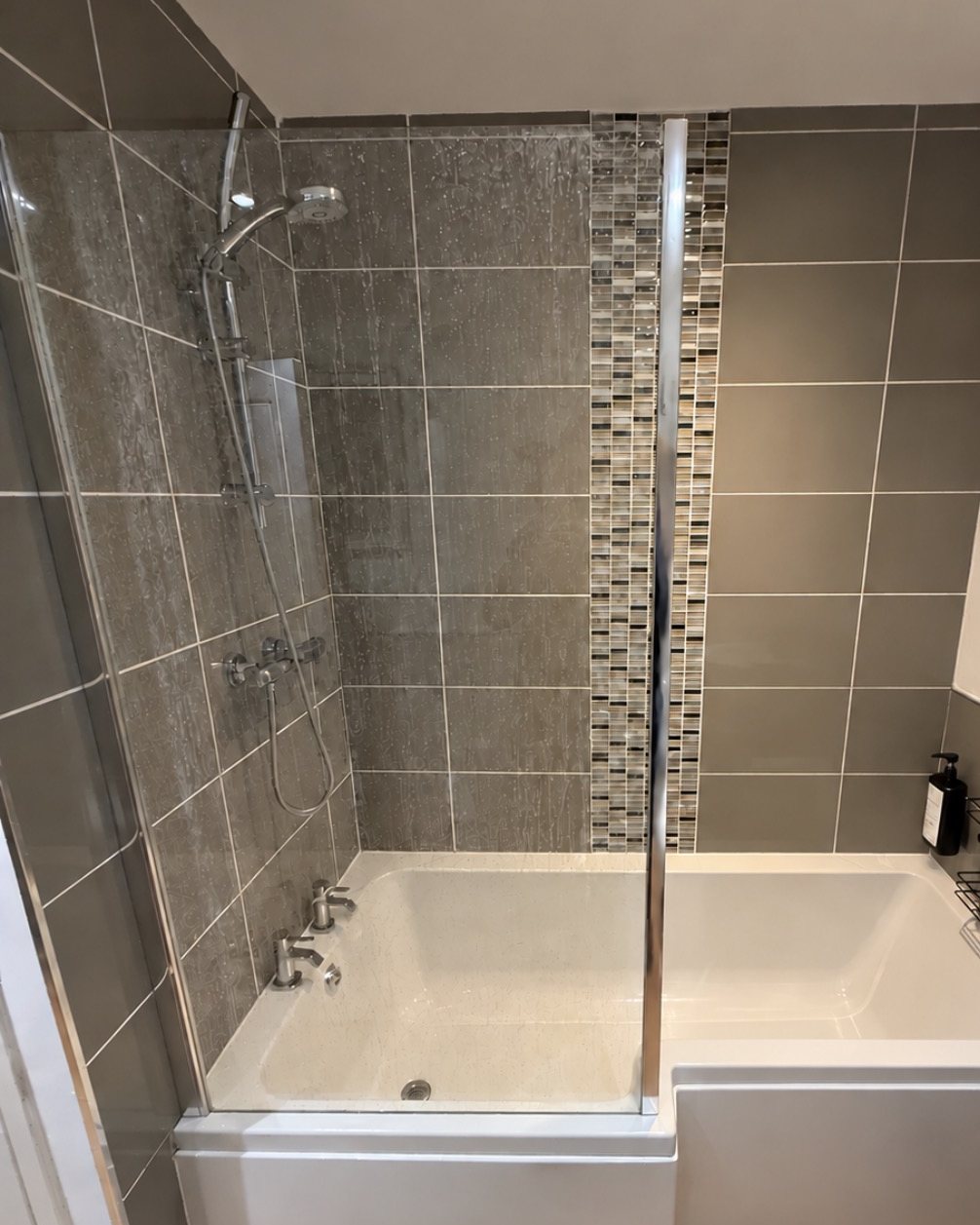
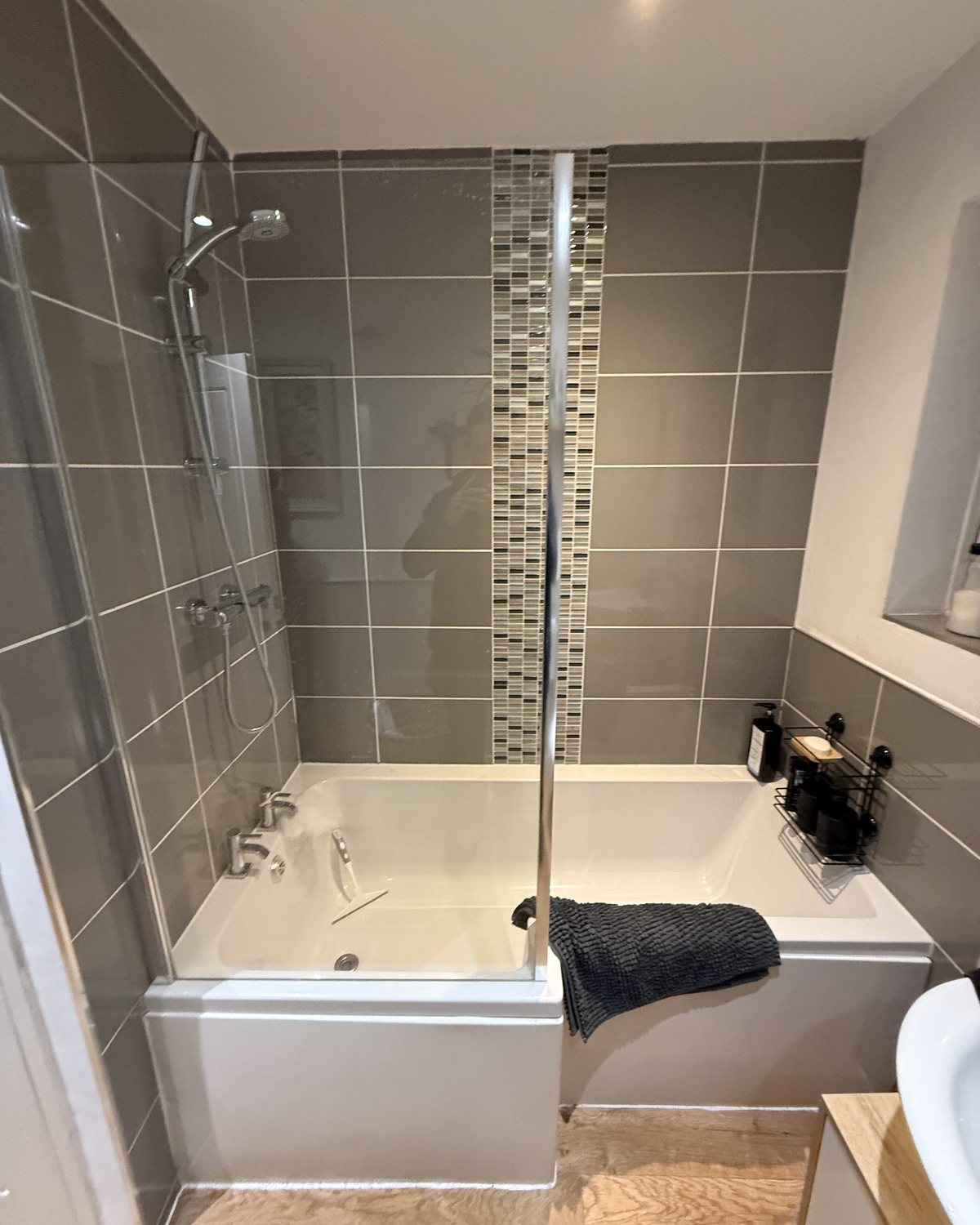
The same bath screen, before and after a softener — Broadland
Hard-water marks on the glass and tiles, then the same bathroom once softened water was supplying it.
Professional water softening, filtration & purification across Norfolk and East Anglia. From protecting your home against hard water and limescale to enjoying beautifully filtered drinking water, we design and install water treatment solutions tailored to your property, your water supply and your lifestyle.
NorwichNorfolkSuffolkEast Anglia
Much of Norfolk, Suffolk and the surrounding region is supplied with hard or very hard mains water. It comes down to geology: a large share of the area’s water is drawn from underground chalk, and as rainwater soaks through that chalk it dissolves naturally occurring calcium and magnesium. Those dissolved minerals are what “hard water” means.
Hard water is generally safe to drink. The issue is what it does to your home: heat or evaporate it and those minerals are left behind as limescale.
Limescale building up on taps, shower heads and glass screens.
White deposits around wastes, seals and chrome.
Scale inside kettles, coffee machines and washing appliances.
Elements and heat exchangers coated in scale.
Constant wiping, scrubbing and descaling.
Less lather, so you tend to use more.
White scale builds up and dulls finishes within weeks.
Little new scale forms; surfaces wipe clean.
Regular descaling products and scrubbing.
Routine cleaning with less effort and fewer harsh products.
Scale collects on elements and inside machines.
Appliances supplied with softened water stay largely free of new scale.
Heat exchangers and cylinder elements gradually coat over.
Scale on the hot water side is greatly reduced.
Poor lather, soap scum on screens and trays.
Lathers easily, so less product does the same job.
A general comparison of what softening does, not a measured result for your home. Results depend on your water and the system specified.
Hard-water marks on the glass and tiles, then the same bathroom once softened water was supplying it.
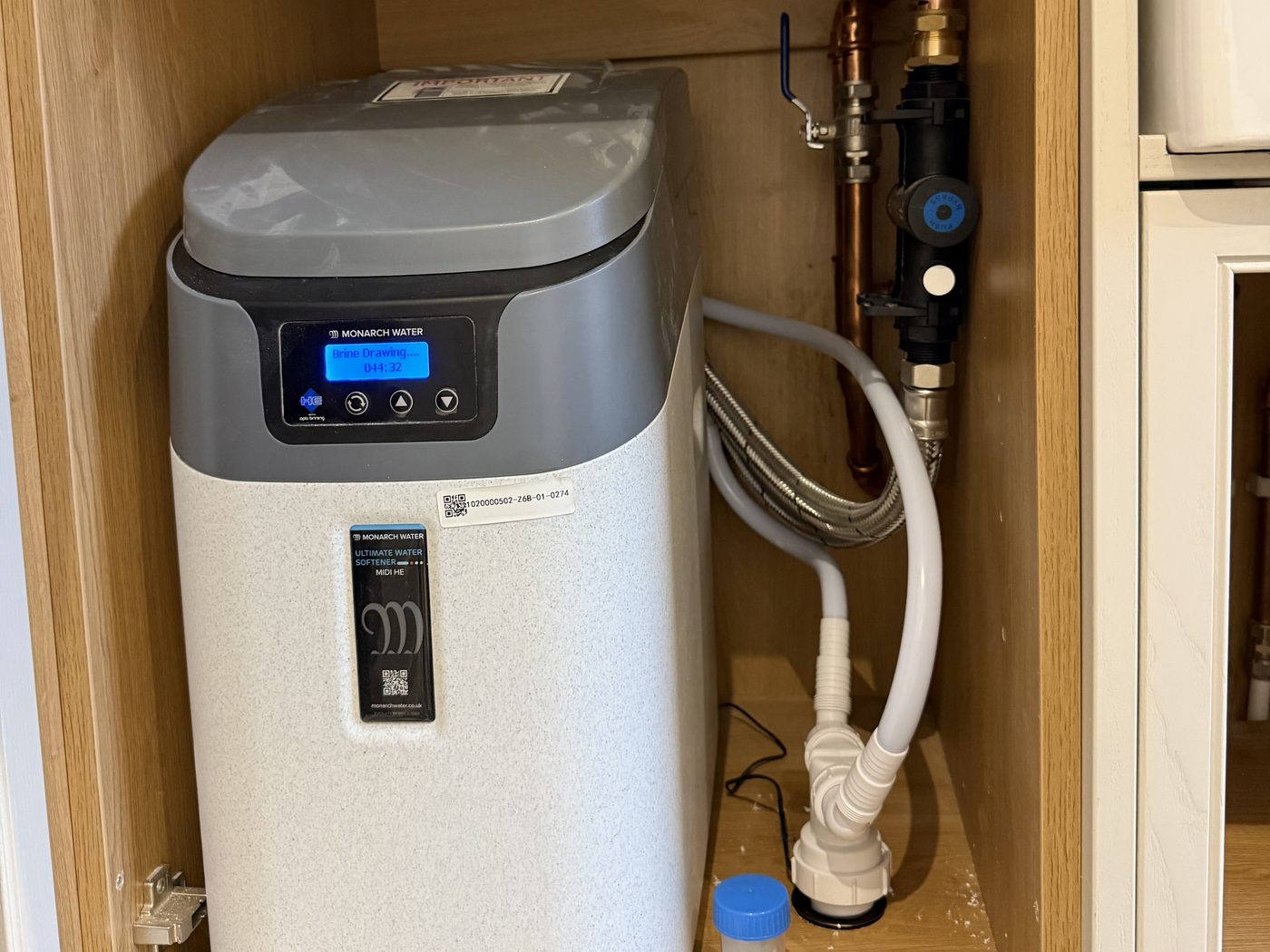
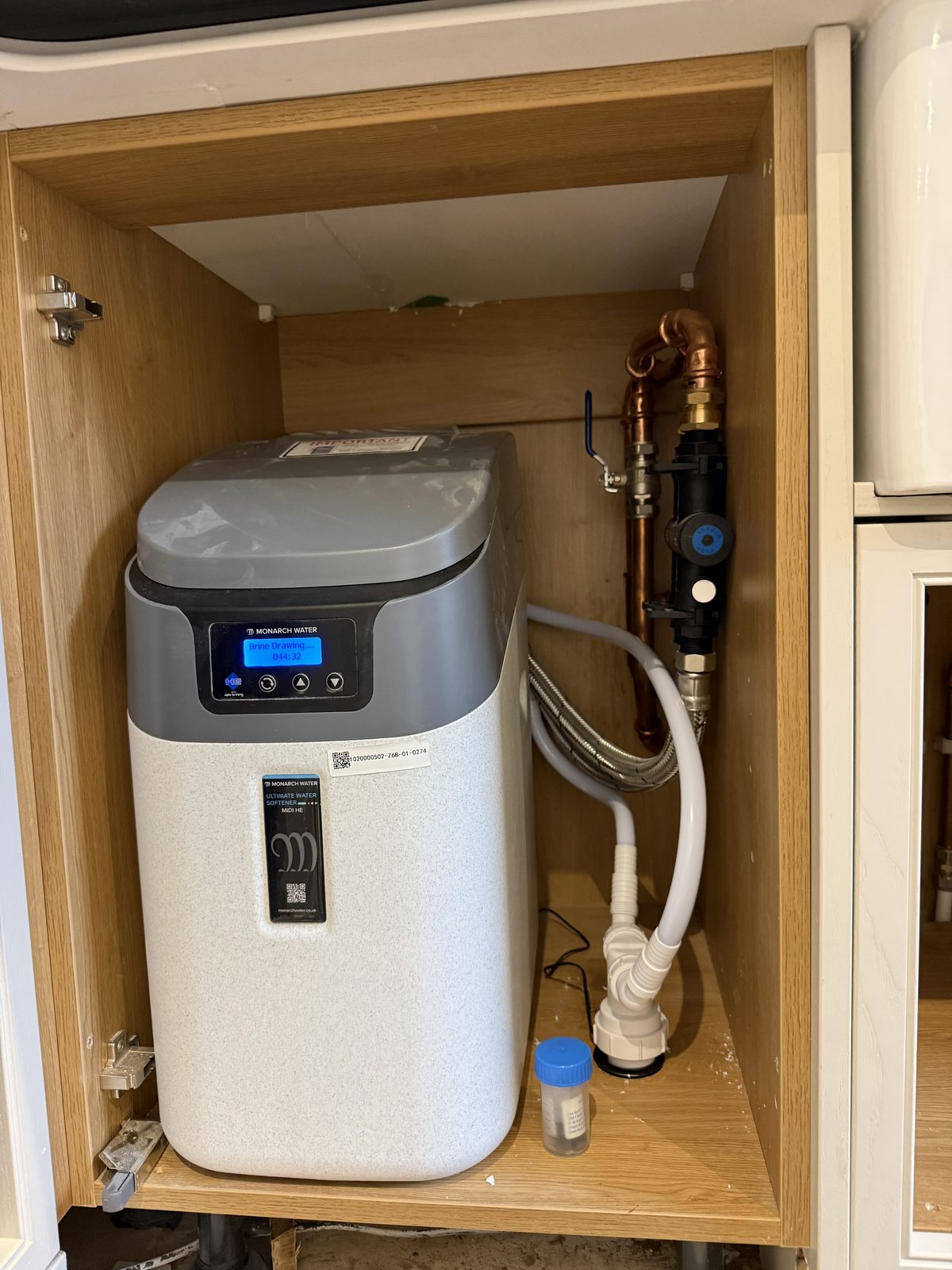
A properly specified ion-exchange water softener passes your incoming water through resin that swaps the calcium and magnesium responsible for hardness for sodium. The resin is periodically cleaned with brine (salt solution), ready to go again. Sized to your household and plumbed in correctly, it treats the water supplying your taps, showers, appliances and hot water system.
Significantly reduces new scale forming on fittings and appliances.
Taps, shower screens and surfaces are easier to maintain.
Soap and detergent work better, so you can use less.
Helps premium bathroom and kitchen fittings keep their look.
Helps protect suitable appliances and plumbing from scale.
Most valuable where water is hard, as it is across much of the county.
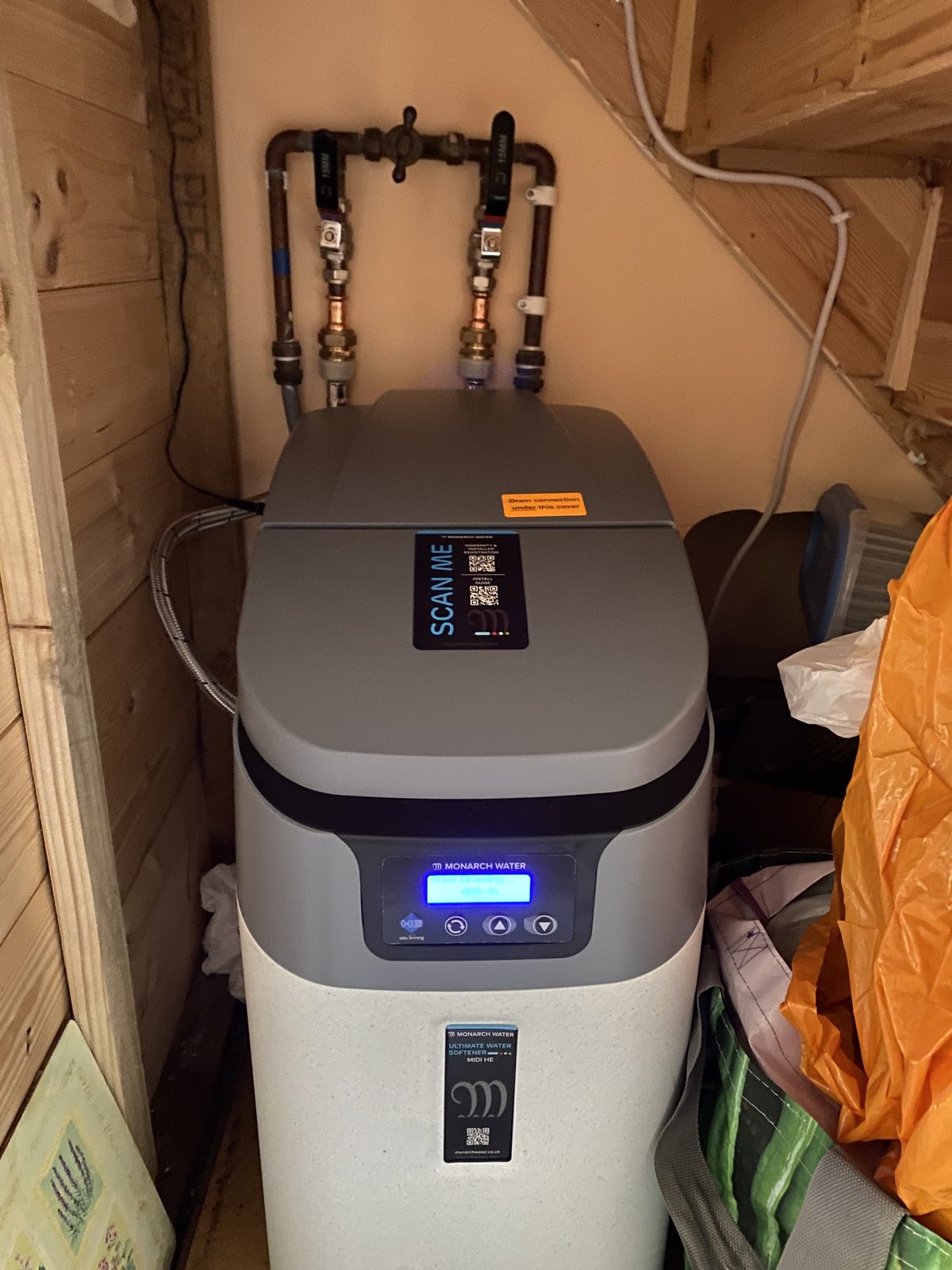
Protecting what you’ve invested in. A new bathroom, kitchen or heating system is a significant investment. Fitting a softener at the same time means new taps, shower glass and hot water equipment start life without a build-up of scale, instead of slowly losing their finish.
A softener needs its salt topping up, an occasional service, and it uses some water each time it regenerates. There’s an initial installation cost. We keep an unsoftened tap for drinking and cooking (usually the kitchen cold tap), and every installation follows UK water regulations and the manufacturer’s guidance.
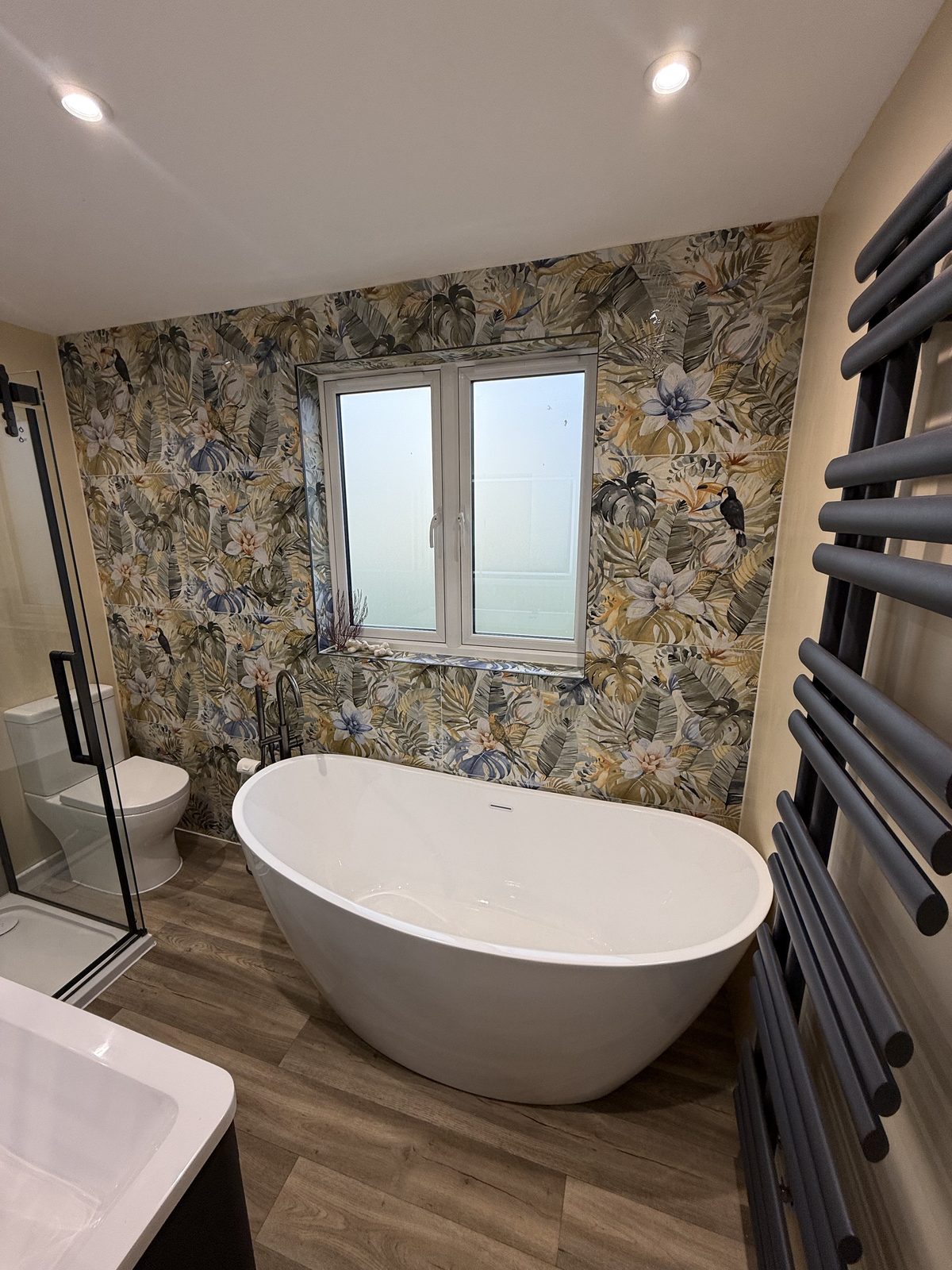
If you’re planning a new bathroom or kitchen, it’s the ideal moment to add water treatment. The pipework is already open, so a softener for the whole home, or a filtered drinking water tap in the kitchen, can be planned in neatly rather than retrofitted later.
We design and install bathroom renovations ourselves, so the water treatment is specified as part of the same job, by the same team.
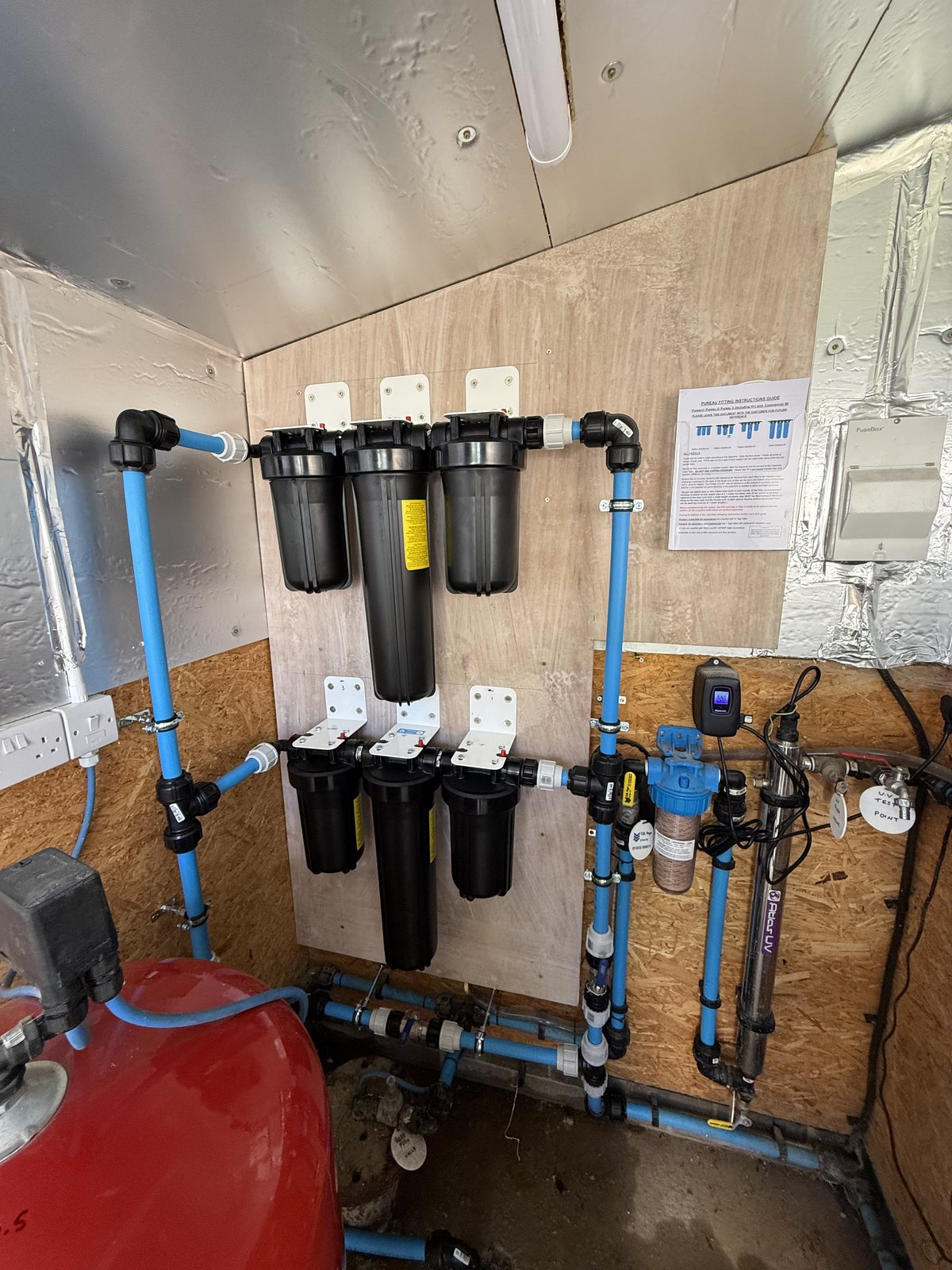
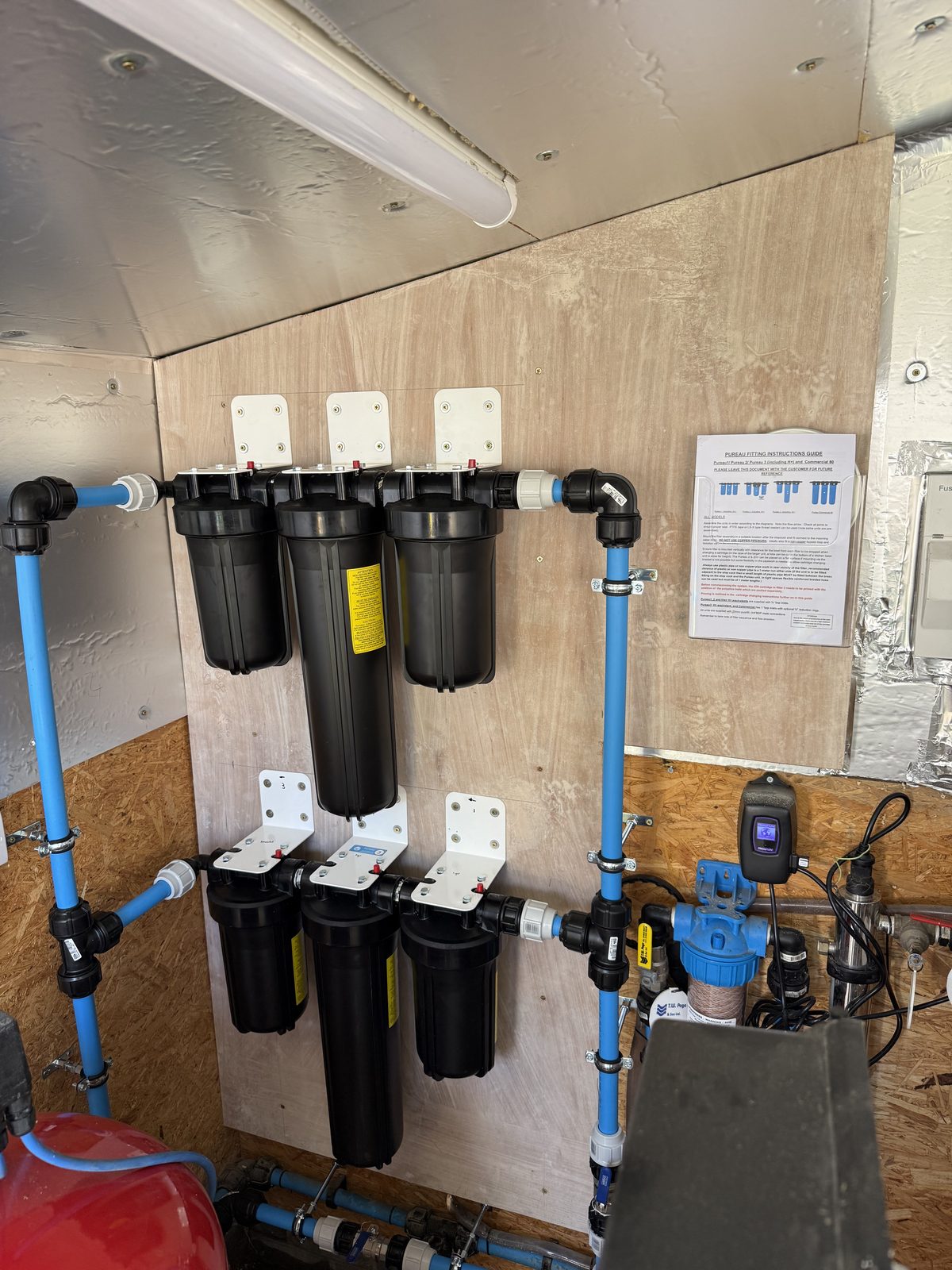
For some homes, the right answer is a whole-property system on the incoming main, designed to tackle specific water quality issues. We install whole-house filtration from manufacturers such as Aquatiere, alongside other professional systems, chosen to suit the water and the property. What it achieves depends entirely on the technology selected, so a whole-house system is built up from stages chosen for your water:
“Whole-house filtration” doesn’t mean every contaminant has been removed. Different systems achieve different outcomes. That’s why we start with what’s actually in your water, your flow rate and your plumbing, then specify a system to match. We work on mains-supplied homes; we don’t install or service borehole or private water supply systems.
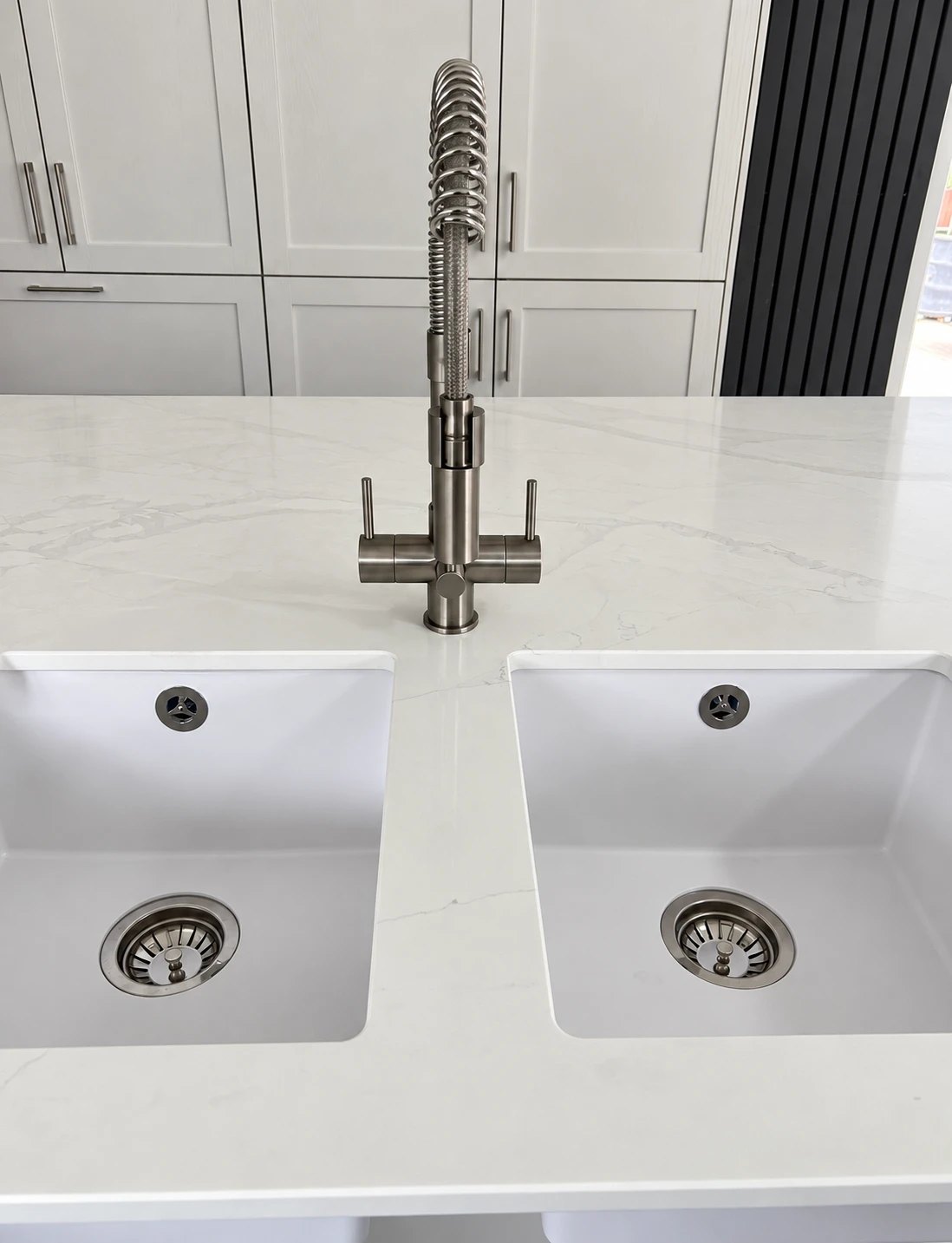
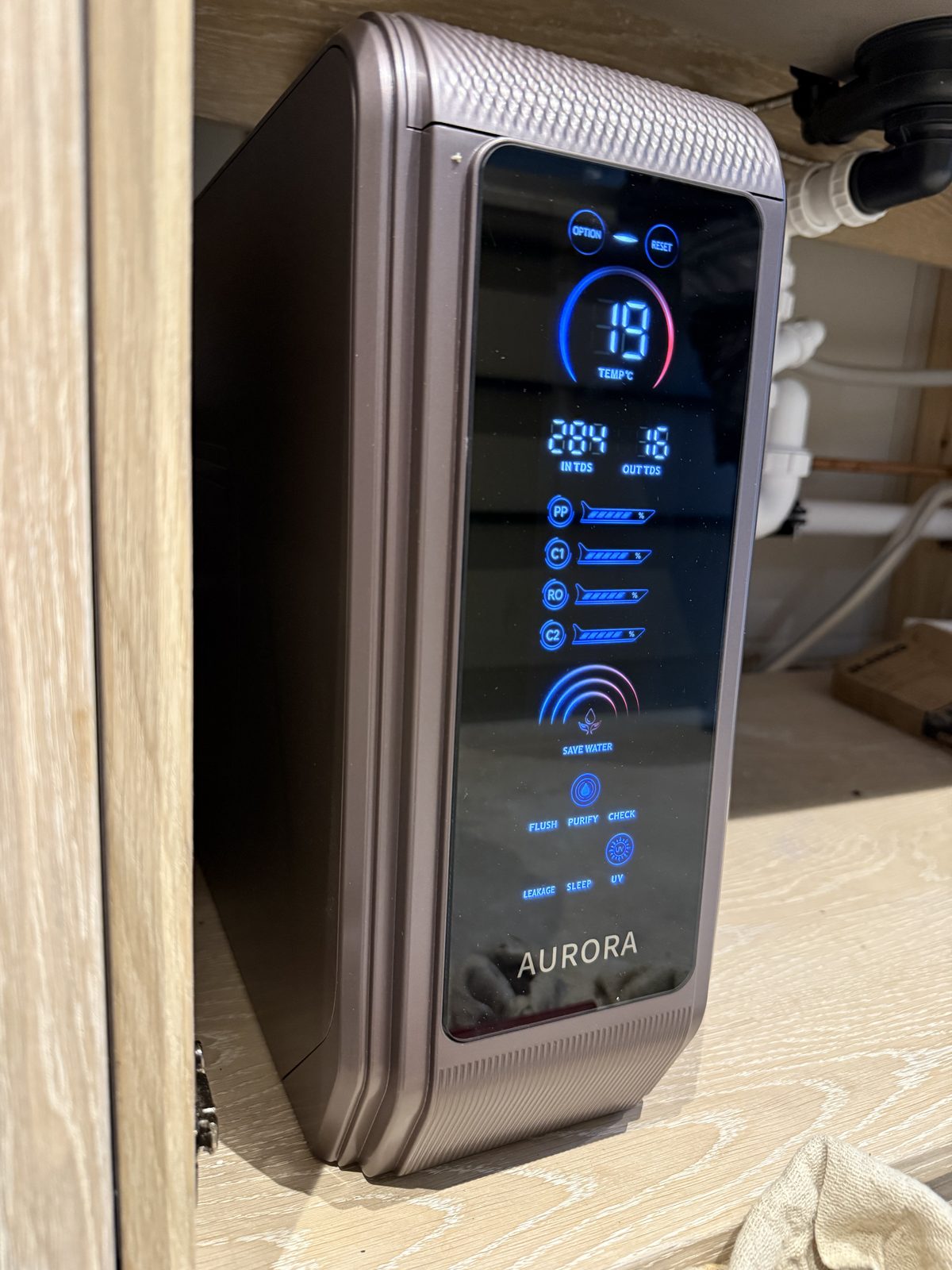
An under-sink reverse osmosis system passes water through pre-filtration stages and then a semipermeable membrane that reduces many dissolved substances, delivering a dedicated supply of highly filtered water for drinking and cooking.
Reduces many dissolved substances, as set out in the system’s certification.
Much lower dissolved minerals, so kettles stay cleaner.
A separate tap for drinking and cooking water.
Can reduce how much bottled water you buy.
Works with selected filtered-water and multi-function kitchen taps.
Remineralisation and further treatment stages if preferred.
Softener or reverse osmosis? They solve different problems. A whole-house softener tackles hardness and limescale throughout the property. Reverse osmosis treats drinking water at one point of use. Many homes have both: softened water for the house, with RO or an unsoftened tap for drinking.
RO systems need their filters and membrane replaced on schedule, and they send some water to drain as part of how they work. Mains water in the UK is already treated to strict standards, so not every household needs RO. We’ll tell you honestly whether it suits you.
Each system does a different job. Many homes combine two, for example a softener for the house plus reverse osmosis for drinking water.
| Solution | Main purpose | More |
|---|---|---|
| Water softener | Reduces hardness and limescale throughout the home. | Softeners |
| Whole-house filtration | Treats selected water quality issues throughout the property. | Filtration |
| Reverse osmosis | Advanced filtration for drinking and cooking water at one tap. | Reverse osmosis |
| UV disinfection | Inactivates susceptible microorganisms when correctly designed, with pre-filtration. | UV |
Four quick questions point you to the type of system worth discussing. It isn’t a water test or a diagnosis. We confirm everything at a consultation.
Water treatment installed by qualified engineers who understand the whole system it connects to, not just the unit in the box.
We check flow rates, pressure and pipework so treatment works with your hot water, heating and fittings.
Experience with complex domestic water systems, including whole-house filtration.
Specified for your water, your property and how you live, with advice that fits.
Neat pipework, sensible positioning for servicing and salt access, and a tidy finish.
Servicing, salt advice and filter replacement for the systems we install.
Precision is Gas Safe registered for gas work and holds relevant plumbing and heating qualifications, including G3 unvented hot water. These are general trade qualifications, not water treatment certifications.
Yes. Mains water across Norwich is generally classed as hard to very hard. Your water supplier publishes the hardness for each postcode, so you can check your own address before deciding on treatment.
Much of the region’s water comes from underground chalk aquifers. As rainwater soaks through chalk it dissolves calcium and magnesium minerals, and those minerals are what make water hard.
It depends on how hard your water is and how much limescale, cleaning and appliance care matter to you. In hard-water areas such as Norfolk many households find the reduction in limescale worthwhile, particularly after investing in a new bathroom or kitchen. We’ll give you an honest view for your property.
It depends on the type and capacity of softener, your household’s water use, where the incoming main is, and the pipework, drain and drinking-water tap needed. We confirm the right specification at a survey and give you a clear written quote before any work starts.
Softened water helps protect the hot water side of a boiler, such as a combi’s plate heat exchanger, where limescale typically forms. The sealed central heating circuit is a separate question: some boiler manufacturers ask for it to be filled with unsoftened water or protected with a compatible inhibitor, so we follow the boiler manufacturer’s guidance. See our boiler installation page for more.
Yes. A correctly sized ion-exchange softener removes the hardness minerals that form limescale, so new scale largely stops building up on the taps, showers and appliances it supplies. Existing scale won’t vanish overnight, but it usually becomes much easier to clean.
Softened water contains slightly more sodium, depending on how hard the water was to begin with. UK guidance is to keep at least one unsoftened tap, usually the kitchen cold tap, for drinking and cooking, and not to use softened water to make up infant formula. We plan for an unsoftened drinking tap on every softener installation.
A softener exchanges hardness minerals (calcium and magnesium) for sodium, so it tackles limescale. A filter physically or chemically reduces other things, such as sediment or chlorine taste and odour, depending on the filter media. Most filters do not soften water, and a softener is not a filter.
UK mains water is treated and regulated to strict standards, so reverse osmosis isn’t needed for safety. It’s worth considering if you want a dedicated supply of highly filtered drinking water, prefer the taste, or want to cut down on bottled water.
Reverse osmosis greatly reduces dissolved minerals, including hardness, in the water it produces, so kettles filled from it stay much cleaner. It only treats the tap it supplies, though, not the rest of the house. In very hard water areas, a softener ahead of the system can also help protect the membrane.
Yes. A whole-house system is fitted on the incoming main and sized to your home’s flow rate. The filtration stages are chosen to suit what your water actually contains, so testing and correct specification come first. It needs suitable space, and often a drain and a bypass for maintenance.
It depends on the system, your water and how much you use. As a general guide, sediment and carbon cartridges are often changed every 6 to 12 months, reverse osmosis membranes every few years, and UV lamps around once a year. We follow the manufacturer’s schedule for your equipment.
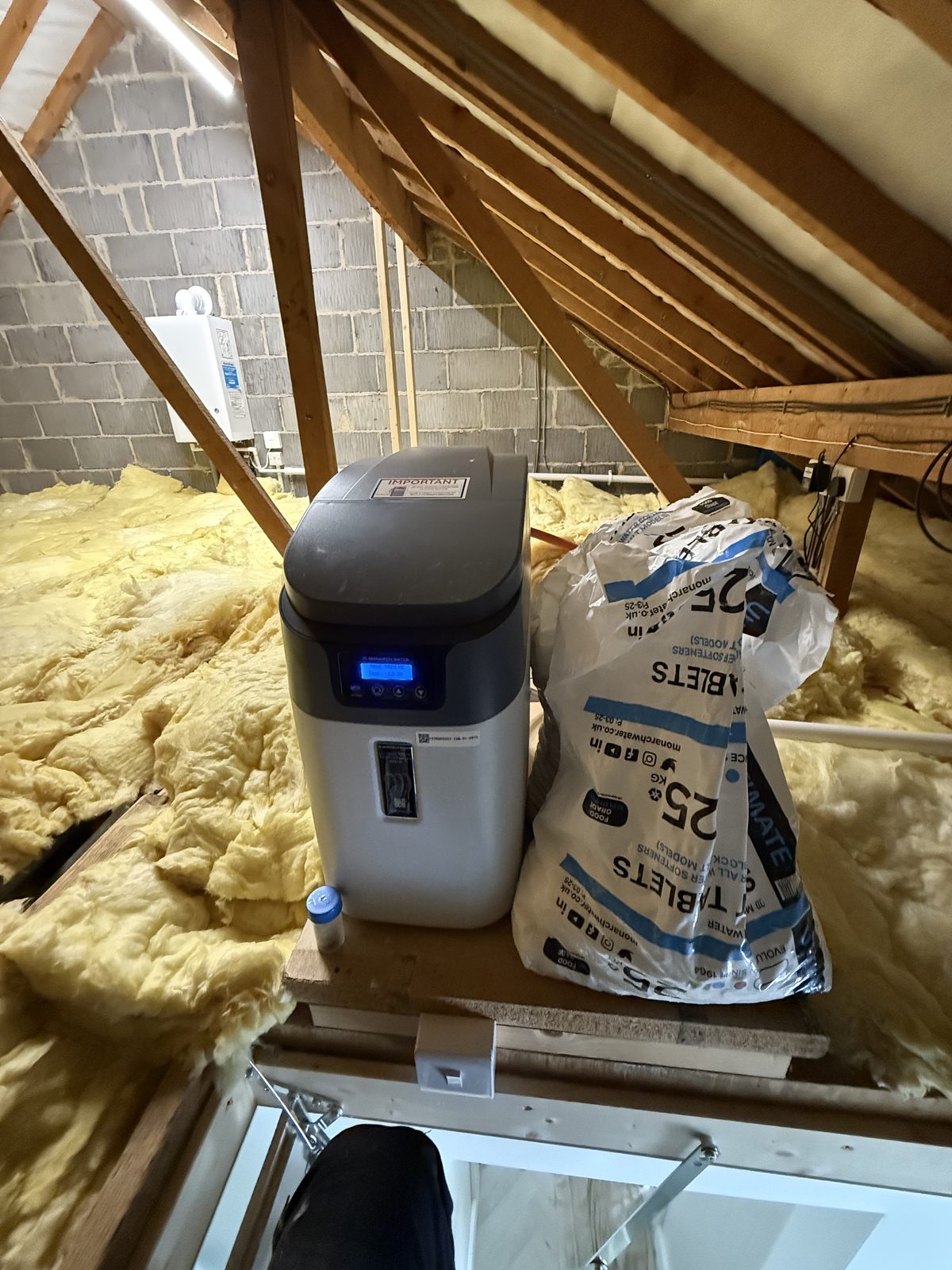
Yes. You’ll top up the salt regularly, and most manufacturers recommend an annual service to check the settings, clean the brine tank and confirm the water is being softened correctly. We offer servicing for the systems we install.
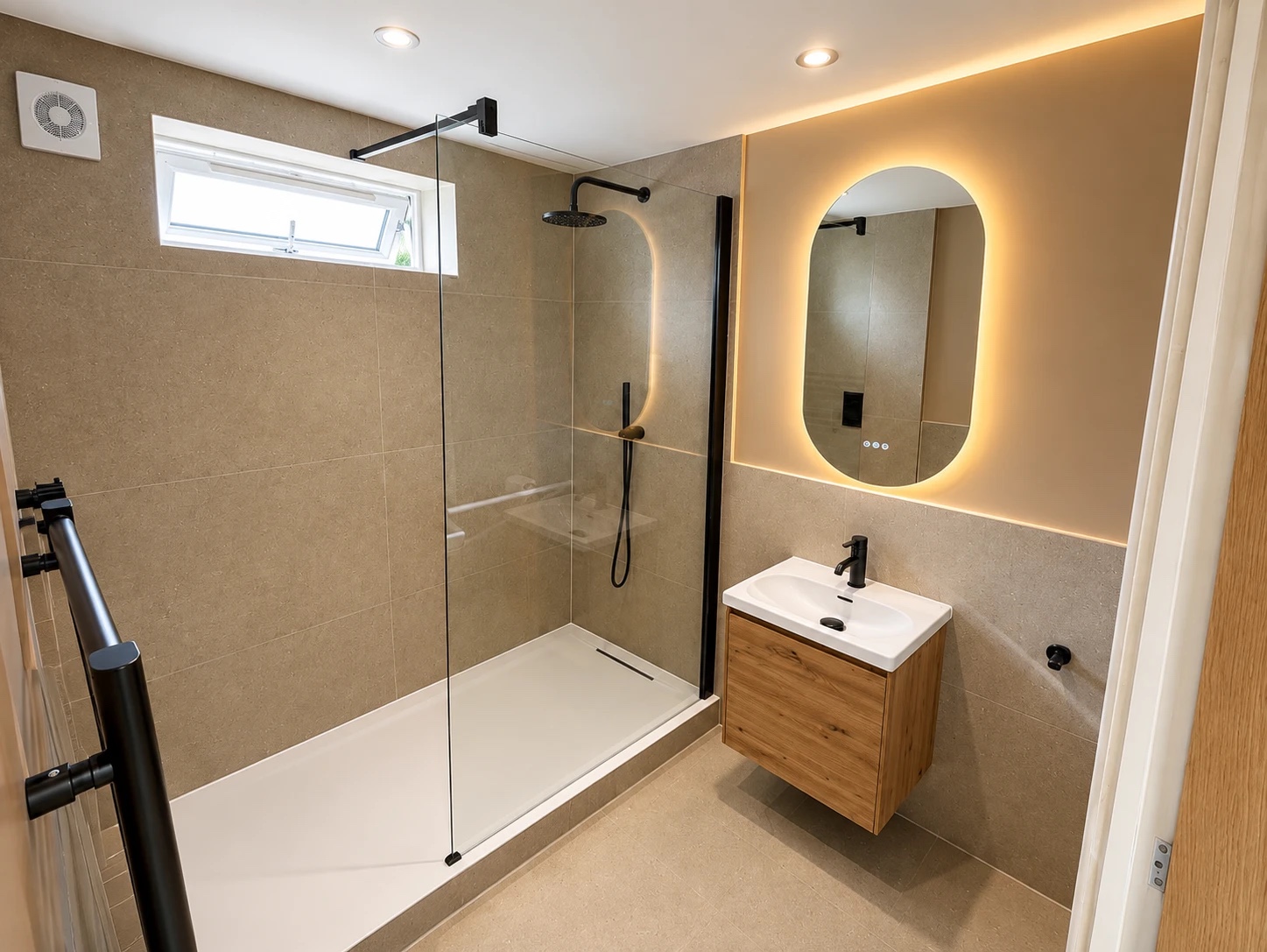
Whether you’re looking to reduce limescale, protect a newly renovated home or explore advanced drinking water filtration, Precision can help you find the right solution.